We love French Toast. Why else would I have 44 (and counting) different recipes dedicated to French Toast? Interestingly enough, French Toast isn’t even French. The earliest recorded recipe to survive is written in Lain, somewhere around the 4th or 5th century. There is no mention of egg, the bread is simply soaked in milk and then pan-fried. It would be more accurate to call this breakfast favorite “Roman Toast” rather than French. By the 15th century, it was commonly called “Pain Perdu” – which is French for “lost bread”. Making French Toast was a convenient way to reclaim stale bread by soaking it in a mixture of eggs and milk, then frying it up. Ironically, in France Pain Perdu isn’t even served in the mornings but rather as a dessert. In the beginning, there were two ways of making French Toast – how the toast was prepared was an indication of the status of your household. One called for stale bread to be dipped in a mixture of milk and egg, the other called for white bread (the most expensive in its day), with the crusts removed. Throwing out any part of a slice of bread, however stale, would never have occurred to the poor. If you could afford to toss out bread, you must be elite!
Culinary historians disagree over the roots of French Toast. The simple concoction of bread, eggs, and milk likely dates back to Medieval times, when the battering process was used to make stale loaves more palatable. The question is whether the French were truly the first to dip and fry their bread, or whether other Europeans stumbled upon the “invention” on their own. So if French Toast dates back to the Romans, why is it known as French Toast today? One popular legend has it that in 1724 an innkeeper in Albany, New York first came up with the recipe that most closely resembles French Toast today. His name was Joseph French. He promoted his breakfast toast as French Toast, which is simply a punctuation error. It seems that Joseph French never learned about the use of an apostrophe “s.” His toast should have been called French’s Toast. In culinary history, this mistake can be seen in a number of different recipes such as German Chocolate Cake. The baker’s last name was – you guessed it – German. My personal take is that while trivia is always nice to know, just so long as the food it good, who really cares?
The most common recipes for French Toast use milk, eggs, vanilla and cinnamon. In this version, I omit the vanilla, replacing it with Sunny D (this gives it just a hint of sweet orange flavoring) and add nutmeg. I like the nutty sweetness that nutmeg brings to the mix.
Super Easy Cinnamon-Nutmeg French Toast
10 Slices of Bread
3 Eggs
2/3 Cup Milk
2 1/2 Teaspoons Cinnamon
1 Dash of Nutmeg
3 Tablespoons Sunny D Orange Juice (optional)
Powdered Sugar for dusting (optional)
Butter for serving
Maple Syrup for serving
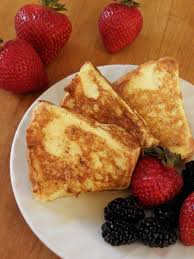
Cut bread to create 20 triangles. Stale bread is best. It will stand up to the batter without becoming soggy and toasts nicely. I prefer Texas Toast or Artisan Bread.
In 4 cup measuring cup, whip eggs with a whisk until pale and blended. Add milk, cinnamon and nutmeg and beat until creamy. Don’t let the eggs get too frothy. You’re looking for a smooth, silky batter that resembles a custard. If you have a batter-powered whisk, this will make quick work of blending. You want to make sure the cinnamon and nutmeg are well incorporated into the batter and not simply floating about on the surface.
Pour batter into a shallow dish large enough to allow bread slices to be dipped. Add Sunny D (not “real” orange juice – smooth-style Sunny D will impart a hint of sweet orange flavoring without the citrus acid that might curdle the milk).
Heat a large griddle to about 325 degrees. Oil griddle with margarine, just enough to lightly coat griddle.
Dip bread slices two at a time into the mixture to coat both sides. (If necessary, continually whisking will keep the cinnamon blended for even distribution for all the bread slices, otherwise the cinnamon may float to the top and there won’t be any left after only a few slices of bread have been dipped).
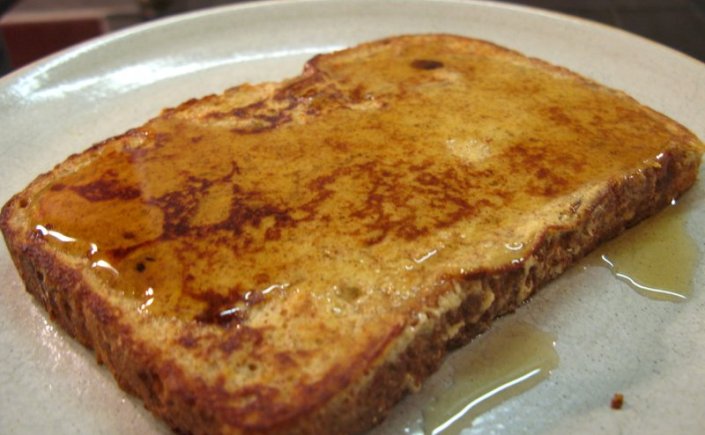
Place dipped slices onto the griddle and cook until golden, about 3-5 minutes. Flip bread to “toast” other side. While the toast is still on the griddle, lightly butter each slice. This will allow the butter to melt quickly and the bread will soak in all that wonderful buttery flavor. If necessary, cook the toast in batches so as to not over-crowd the griddle.
Plate on individual warmed plates. If desired, dust with powdered sugar. Pour on the syrup and enjoy! This is wonderful with fresh fruit and maple sausage.

 If you have a Costco near you, RUN don’t walk to the bakery section and pick up a loaf of Greenleo’s Best Cinnamon Bread. We are talking Handmade Artisan Bread the way we would bake it if we had the time. I kid you not, this sticky, sweet bread will transform into the most awesome Cinnamon-Roll-French-Toast extravaganza and your entire family will be doing a “It’s a Beautiful Morning” happy dance around the breakfast table. So quick, so easy and oh so delicious!
 Royal Toast – Made with Bread
 Royal Toast – Made with Cake


 Welcome to Rosemarie's Kitchen