
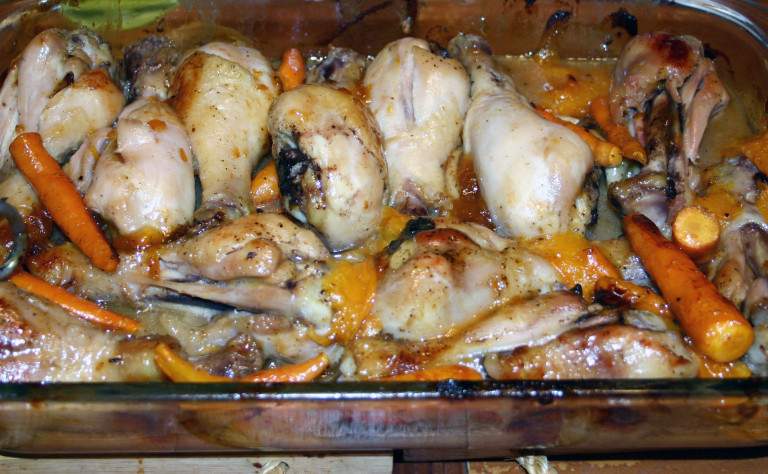
Kiddo has always been a fan of all things Japanese. When he was younger, we took “pretend” trips to other countries via Imaginary World Travels. When asked “which country would you like to visit”, his initial response was “Japan!” Kiddo was disappointed when I would remind him we had already visited Japan, and the point of our Imaginary travel was to visit a different country during each school break. Needless to say, the title of this recipe alone made it an automatic hit with him. It’s very similar in taste to Filipino Chicken Adobo, but with a thicker, sweeter sauce.
The first time I made Japanese Glazed Chicken Drumsticks, I made a mistake, which turned out to be a good thing. (Don’t you just love it when that happens?) I had transferred the chicken to a serving bowl, and was allowing the sauce to thicken just a little more when something happens (can’t remember what) that needed my immediate attention in the backyard. I turned down the heat, and had Kiddo stir the pot while I ran outside to help Hubby. It took a little longer than planned, and I hadn’t set a timer or instructed Kiddo to remove the pot after 5 minutes. The sauce became this wonderful, thick ultra-sticky glaze.
Note: Looking for something a little different in the Chicken Wing Appetizer Department? Both Adobo Sauce and Japanese Glaze are excellent alternatives. Just remove the chicken from the sauce using a slotted spoon. The wings will be awesomely delicious while still in the sticky-finger game.
Japanese Glazed Chicken Drumsticks
12-16 chicken drumsticks
1/2 Cup Water
3/4 cup balsamic vinegar
2/3 cup Japanese soy sauce (Kikkoman’s)
2 1/2 tablespoons ultra fine sugar
4 garlic cloves, peeled and bruised
1 small hot chili peppers, slit open, seeds removed
2 Green Onions, chopped for garnish (Optional)
Peel and bruise garlic. Chop hot chili peppers and green onions. Set aside until ready to use.
Place all the ingredients except green onions in a saucepan over a high heat. Bring to the boil, then reduce to a simmer for about 40 minutes.
Increase the heat, turning the drumsticks frequently in the liquid, and cook until the liquid has reduced to a thick glaze, about 20 minutes.
Remove chicken from glaze, keep warm. Lower heat and continue to allow glaze to reduce and thicken, about 15 to 20 minutes longer, stirring constantly to prevent burning. Return chicken to the pot, coat well with glaze.
Arrange the chicken on a serving platter. Remove the garlic clove and chili from the glaze, then spoon any remaining the glaze over the drumsticks. Garnish with chopped green onions just before serving.
Serve with steamed rice or Spicy Asian Stir-Fry Spaghetti.
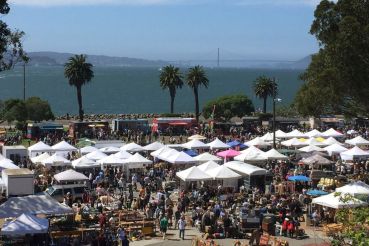 and local craftsmen. There is everything from recycled art to small cottage-kitchen homemade goods. We found a vendor peddling her homemade marshmallows in a variety of flavors (our favorites were the salted caramel and peanut butter mallows). We sampled some wonderful, creamy goat cheeses from a nearby farm (bought four different flavored cheeses), various honey from local keepers, balsamic vinegars, and bottles of the most flavorful olive oils. These vinegars and oils are lovingly made in small batches – a bit pricey, but well worth the extra costs. If you are ever in the San Francisco area on the last weekend of the month, I highly recommend a side trip to Treasure Island. The views of the bay are spectacular, the merchandise offered is unique and the endless assortment of food trucks (the best in the bay) are sure to satisfy whatever craving you may have. Get there early, as the crowds grow throughout the day. And plan for a lot of walking.
 Needless to say, the quality of your chicken will greatly impact the flavor of your dish. Whenever possible, look for hormone-free, antibiotics free, all natural chickens. The “brands” that I prefer are Rocky or Rosie Chicken – both from the same company. Their chickens come from Sustainable Farms in and around the Sonoma area of California. The chickens are then packaged in nearby Petaluma. Beautiful country – great farms, vineyards and awesome foods abound throughout the Sonoma Valley.
 Welcome to Rosemarie's Kitchen