New Mexico – such a beautiful state. So colorful, so wild, so western. Yet very cosmopolitan in its own right – Santa Fe’s art community and Albuquerque’s balloon-filled morning skies are not to be missed.


When we lived in Las Vegas (Nevada); we could travel anywhere in the world – if asked the question “Where are you from?” the answer “Las Vegas” needed no further explanation – like New York or Paris – you just knew what was meant by the answer. That is unless we were anywhere in or near New Mexico. There is a Las Vegas New Mexico, not to be confused with the Vegas strip. While traveling through New Mexico, you had to clarify which Las Vegas.


The food of New Mexico has a Mexican influence; while remaining distinctively “New Mexican” flavor. Go to a Mexican Restaurant; Sopaipilla are found on the dessert menu. Sopaipillas are fried puffs of billowy pastry served with honey and a dusting of powdered sugar. Dine out in New Mexico, and Sopaipilla comes with dinner much the same way rolls come with your steak. Why? Depending upon the dish, you need that honey to coat your tongue and help put out the fire raging in your mouth. It’s take a bite of food, then follow-up with some honey, fan yourself, then take another bite of food. New Mexican is an animal all its own – somewhere between Mexican and Tex-Mex with a lot more spice. New Mexican cuisine is a regional cuisine developed in uniquely isolated circumstances and is therefore not like any other Mexican food in the United States. In New Mexico, green chile is hotter than red chile. New Mexican Green Chile pepper is grown in the state’s very high altitude (4,000–8,000 ft) and dry, hot climate of the state. Much like grapes for wine, these growing conditions contribute, along with genetics, to giving New Mexico green chile its distinctive deep green color, texture, and flavor. The climate of New Mexico tends to increase the capsaicin levels in the chile pod compared to pods grown in other regions. This results in the possibility of hotter varieties. New Mexico green chiles can range from mild to extremely hot. And some form of chile pepper is in everything. And yeah, it’s good stuff!
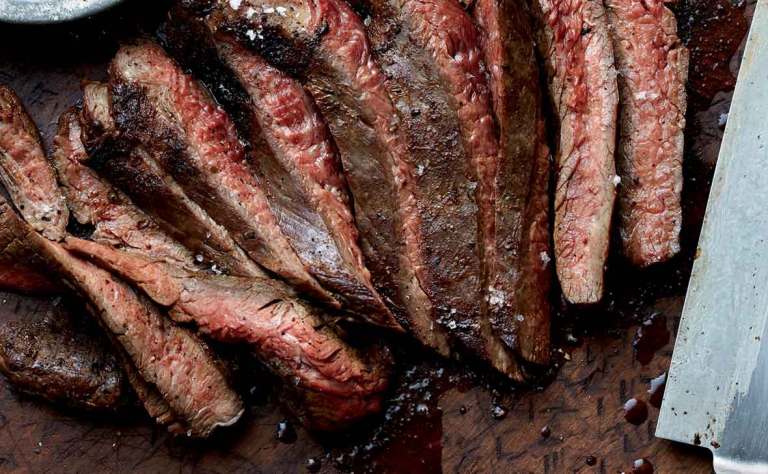
New Mexican Grilled Flank Steak
Spice Rub
1 teaspoon ground cumin
1 tablespoon kosher salt, or to taste
2 teaspoons ground coriander
2 teaspoons New Mexican Chile
1 teaspoon paprika
1 teaspoon freshly ground black pepper
1 teaspoon garlic powder (optional)
1 teaspoon cayenne pepper
To make the spice rub: In a baking dish large enough to fit the steak, stir together all the ingredients.
Add the steak to the spice rub, turning to coat the meat thoroughly with the rub and pressing with your fingers to help the rub adhere to the meat. Cover the pan, place in the refrigerator at least 1 hour. The longer the better, up to 6 hours for the rub to really flavor the steak..
Flank Steak – Ready to Grill
1 flank steak (about 3 pounds)
Olive oil for the grill
When you’re ready to cook the steak, let it rest at room temperature while the grill is heating. Build a hot fire in a charcoal grill or preheat a gas grill to high. Using a grill brush, scrape the heated grill rack clean. Lightly coat a paper towel with oil and, holding it with long tongs, carefully rub the oiled towel over the grill rack.
Place the flank steak directly over the flame or heating element grill and let it cook, undisturbed, for about 3 minutes. Rotate the steak 90° and let it cook, undisturbed, for another 3 minutes. Flip the steak and repeat on the other side so it cooks another 3 minutes undisturbed, is rotated 90°, and then cooks 3 more minutes. If you like your steak medium-rare, it should be done at this point
Although not recommended; if you like your steak medium or well done, transfer the steak to a cooler part of the grill for a few more minutes to cook to the desired doneness.
Transfer the steak to a cutting board, cover it loosely with foil, and let it rest for 10 minutes. Carve flank steak against the grain into slices about 1/2 inch thick, pile the slices onto a platter, and serve immediately.
Great with warm tortillas, rice and beans.

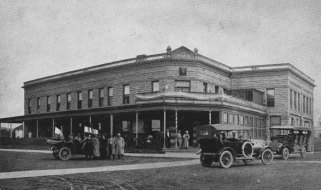 I know, I’m all about posting a few memories and a recipe or two, but I’d like to take a moment here and promote a wonderful place to call “home” in Wapiti, Wyoming. Wapiti is situated about half-way between Yellowstone’s east gate and Cody, Wyoming with easy access to both. You can take in all the wonder of Yellowstone by day, and the sights of Cody by night. Cody is home to the Buffalo Bill Museum, a nightly rodeo throughout the summer and the Irma Hotel, built in 1902 by Buffalo Bill. There’s even a shoot ’em up western gunfight right outside the hotel. And let’s not forget about Yellowstone National Park. Yellowstone, with its ever-changing thermal features and abundant wild life is never the same visit from one day to the next. The fresh air (away from the geysers – those do smell like rotten eggs), the beautiful meadows and wide open spaces are spectacular. With any luck, you might even see a wolf or a grizzly feeding. What an adventure! At the end of the day, you’ll want a place to stay that is quiet and relaxing. A place to sit and take in the stars, to ponder and reflect at the end of a perfect day.
 Rand Creek Ranch is just the place – with cozy cabins, the most comfortable beds and friendly owners. Krystal and Joel not only welcome you to their ranch when you arrive, they continue to socialize with their guests in a unique way – with fireside chats each evening around a campfire. Guest gather, share their adventures of the day and get to know one another. Krystal bakes up fresh goodies each morning, leaving her wonderful muffins or coffee cakes on your porch along with fruit and juice to greet you each day. She even has a cookbook, which of course I’ve added to my collection. The recipes all look yummy and the pictures of the ranch are wonderful. If you ever travel to the Yellowstone area, I highly recommend you stay at Rand Creek Ranch for a relaxing get away you won’t soon forget. For more information, here’s a link to the ranch with all the details:
  Obviously, I’m feeling rather western after such a wonderful vacation from life. It’s only fitting that I share a little cowboy cooking. There are two things that are synonymous with cowboy cooking – grilled meats and a good pot of beans. These are foods that are easy to cook while out on the range. And let’s face it, we all love a good cut of steak sizzling on the grill. Just thinking about it will get my mouth to water.
 Let’s start with what the heck is Cowboy steak? A true cowboy steak is a rib eye steak with a long section of rib bone still attached, known as the “handle”. It’s said that cowboys of the old west used the rib bone to pick up their steak and eat it right off the bone, hence the name “cowboy cut”. The steak can weight as much as two or three pounds (for a double-cut), and stand as much as three inches thick. A true cowboy cut with the long rib bone isn’t something you can get from your local grocery store, even if it has a butcher’s counter. Most grocery stores receive their meat already cut into sections, with the long-handled rib bone removed. I’ve chatted with a couple of butchers at my grocery stores, and they are all of the opinion that the bone is more a matter of presentation rather than flavor. While bone does add flavor, the “handle” doesn’t actually come in contact with the meat so you will have the same flavor results with a thick cut of bone-in rib eye. While I was disappointed, I reasoned that the extra bone was an additional cost that truly isn’t necessary. If you feel you absolutely need a true cowboy cut rib eye, you can order them online for about $50.00 per 22 oz steak.


 Welcome to Rosemarie's Kitchen