
The Catholic Church trace its existance back to the very beginning. We have always acknowledged Saint Peter, the Rock, as our first Pope. What is a Pope but a Vicar of Christ. It is only fitting that the first Pope was appointed by Christ himself.
This is just another way of saying the Catholic Faith is the oldest of the organized Christian faiths. The word Catholic means Universal. One united body in Christ from the very beginning. While the Old Testament clearly dates back before the time of Jesus, it comes to us through the Jewish Faith. This is why many of the customs within the Catholic Church are similar to those in the Jewish Faith – those are our roots. The books of New Testament were not canonized until the late 300s. The Council of Rome, under the leadership of Pope Damasus, assembled the 73-Holy Books we now call the Bible. The biblical canon was reaffirmed by the regional councils of Hippo (393), Carthage (397) and finally definitively reaffirmed by the Ecumenical Council of Florence in 1442. Again in 1546 the Ecumenical Council of Trent solemnly defined this same collection as Canon after it came under attack by the first Protestant leaders, including Martin Luther.
Today the Catholic Church celebrates Divine Mercy Sunday. When you put it in the perspective of the age of the Church, you realize just how new the observance of Divine Mercy Sunday is. Its very existence is yet further proof that Christ is risen, and that He continues to teach us, to lead us to God the Father. The very existence of Divine Mercy Sunday was instituted by Christ himself.
The horrors of World War I were still fresh in the minds of people who now faced a Great Depression. It was not an easy time to have faith is a loving God who cared for His children. In anger and desperation, people were bound to their sins. It was in this dark time in 1931 that a Sister Faustian Kowalska of Our Lady of Mercy in Poland was visited by Christ himself. He appeared to her in a vision, proclaiming that the Church establish devotionals surrounding the Sunday immediately following Easter. Among these are a Novena, the Chaplet of Divine Mercy, and the Hour of Great Mercy. Jesus died for the forgiveness of sin. Now we need to seek that forgiveness, seek His mercy. And so He gave us yet another opportunity to come to Him with a contrite heart.
Kyrie eleison
Christe eleison
Kyrie eleison
Divine Mercy Sunday Supper
Hickory Balsamic Roast Chicken
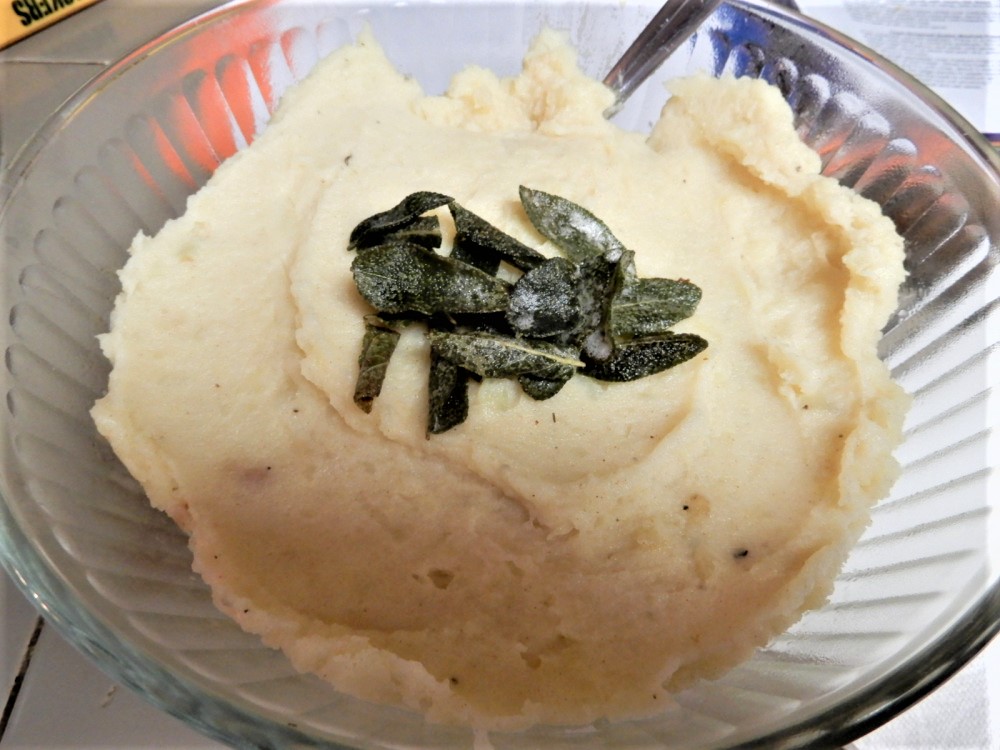
Sage Butter Mashed Potatoes
Buttery Parsley Carrots
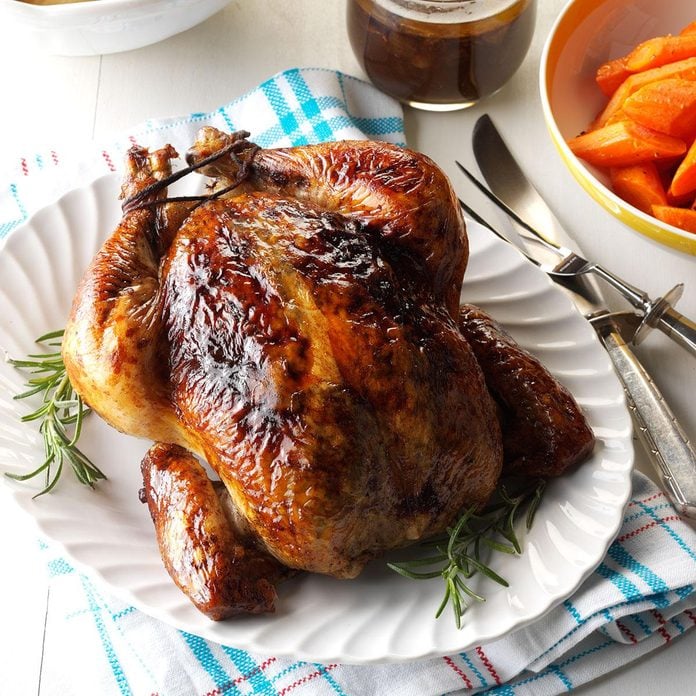

Hickory Balsamic Roast Chicken
2 tablespoons fresh Rosemary
3 Garlic Cloves
6 Shallots
Kosher Salt to taste
White Pepper to taste
1 Roasting Chicken
1/2 cup Chicken Stock
1/2 cup Hickory Balsamic Vinegar
Rosemary Sprigs for garnish
Heat oven to 350-degrees.
Strip rosemary from sprigs, mince and place into a small bowl. Peel and finely mince garlic, add to the rosemary. Season mixture with salt and pepper, set aside.
Peel shallot onions. Trim root ends, cut in half. Scatter shallots in the bottom of a roasting pan. Set aside.
Pat chicken dry. With fingers, carefully loosen skin from the chicken around the breasts and thighs. Gently rub rosemary mixture under the loosen skin. Tuck wings under the breasts, tie the legs together. Place chicken in the roaster on top of the shallots.
Mix chicken stock with balsamic vinegar. Pour mixture over the chicken. Place in the heated oven to roast for about 2 hours. Increase heat to 400, continue to roast until skin becomes a deep golden brown. Remove from oven; tent to keep warm. Let chicken rest for 15 minutes. Transfer to a serving platter, garnish with fresh rosemary sprigs.
Onions along with any remaining pan drippings may be served with the carved chicken if desired.
Sage Butter Mashed Potatoes
3 lb. small Yukon Gold Potatoes
12 tablespoons (1 1/2 sticks) Butter, divided
12 fresh Sage Leaves
3/4 cup Half-and-Half
Kosher Salt to taste
Freshly Ground Black Pepper to taste
Peel potatoes, cut into quarters. Place in a stock pot with just enough cold water to cover the potatoes. Bring to a boil, then reduce heat to medium and cook until tender, about 15 minutes. Drain well, return to stock pot and “dry” potatoes over low heat for about 5 minutes.
In a small saucepan over medium-high heat, melt 8 tablespoons (1 stick) of the butter. When the foam subsides, add the sage leaves and fry until crisp, about 3 minutes. Using a slotted spoon, transfer the sage leaves to paper towels to drain and season with salt. Reduce the heat to medium and continue cooking the butter until it is brown but not smoking, 2 to 3 minutes more. Pour into a heatproof bowl and set aside.
Meanwhile, in a small saucepan over low heat, combine the remaining 4 tablespoons (1/2 stick) butter and the half-and-half. Heat until the butter melts and the mixture is hot, about 8 minutes.
Mash the potatoes using a potato masher or hand-held mixer until creamy but not yet smooth. Using a spatula, fold in the Half-and-Half mixture and 4 to 5 tablespoons of the brown butter until smooth. Season with salt and pepper.
Transfer the potatoes to a serving dish. Garnish with the sage leaves and drizzle with the remaining brown butter. Serve immediately.
Buttery Parsley Carrots
1 lb Carrots
2 tablespoons Water
3 tablespoons Butter, divided
1/4 teaspoon Sugar
Salt to taste
White Pepper to taste
2 tablespoons Parsley
Wash and peel carrots. Cut 1/4-inch thick on the bias. Scatter carrots in a skillet over medium-high heat. Add water, a tablespoon butter, sugar, salt and pepper. Once the water begins to bubble, cover and reduce heat to medium. Continue to steam-cook for 10 minutes, or until carrots are tender.
Snip parsley, set aside. Once carrots are ready, transfer to a serving dish. Add remaining butter and snipped parsley. Toss to melt butter from the warmth of the carrots. Taste, adjust seasoning as desired. Serve and enjoy.
Give thanks to the Lord, for He is good, His love is everlasting.

 Welcome to Rosemarie's Kitchen
Fabulous Sunday lunch Rosemarie
LikeLike
Thank you.
LikeLiked by 1 person