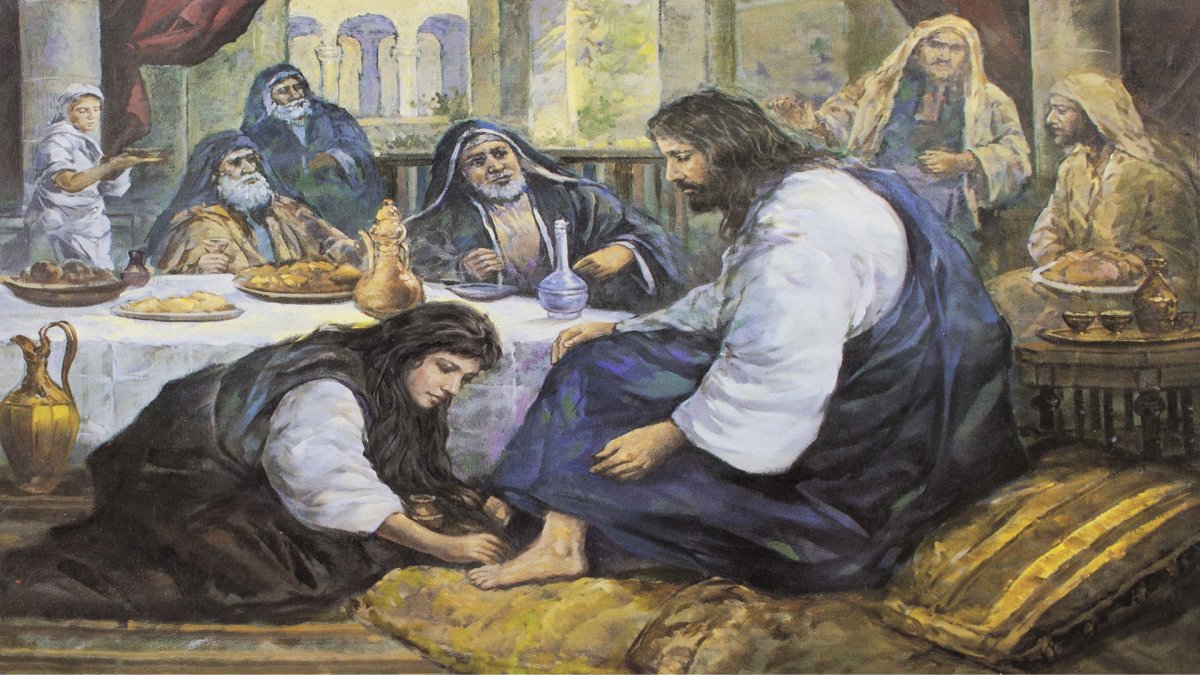
Today is Wednesday of the most Holy week in history. There is much going on. Often the events that took place at the home of Simon the Leper in Bethany are overlooked or forgotten.
Matthew tells us that on this day, as Jesus was reclined at table, a woman enters the house. She is filled with a repentant heart, humbling herself before Christ with praise and adoration. She goes even further, approaching Him with a jar of expensive perfume. She does not offer Him the jar and back away, but rather pours the perfume over His head, then falls to His feet, washing them with her tears and drying them with her hair. She did so many things in that moment which were shocking to all who were there. The waste of the expensive perfume has often been brought to our attention. But there was more. Touching a man she was not married to – oh my! And uncovering her head to dry His feet with her hair – shocking! Those present with Jesus were angered, especially Judas. Remember, he was chosen by Christ to be the treasurer of the group. (Why Judas and not Matthew was tasked with keeping the books never made sense to me). Judas saw the waste of resources, and the fact that Jesus, a Teacher, one called Rabi, would allow a woman to touch Him in such an intimate way was scandalous. Even those present missed what was actually taking place, so occupied with the outward appearances.
She had anointed Jesus with an expensive perfume. She had anointed Him King. She had also prepared Him for burial. It was a declaration of who He was and a prophecy of what was to come. Some claim this was Mary, the sister of Martha and Lazarus. Others think she was an unknown woman of questionable reputation. It truly doesn’t matter who she was, but rather what it was she had revealed that is important.
Why is this sometimes overlooked in the narrative of Holy Week? In the very next verse Saint Matthew tells us that Judas has come to an arrangements with the Chief Priests. For his betrayal, he will receive 30 pieces of silver. In Hebrew culture, this was not a lot of money. In Mosaic Law, this is the amount to be paid to a slave owner, should someone cause the death of his slave, to cover the cost of the laborer lost and his subsequent burial. Judas was to receive compensation equivalent to the loss of a slave. When Judas Iscariot ask the high priests “What are you willing to give me if I deliver him to you?” they count out 30 pieces of sliver. To them, Christ’s life was not worth more than that of a slave. He who is last shall be first. The Son of God was not worth more than a slave, and yet this worthless man would pay a ransom for the whole world. How powerful is that?
Gemelli means twins, representing the two natures of Christ – human and Divine. The Sausage is cut into rounds, representing the 30 pieces of silver.
Gemelli Pasta with Coin-Cut Sausages
8 oz Gemelli Pasta
2 Mild Italian Sausage Links
2 Hot Italian Sausage Links
Olive Oil as needed
1 (16 oz) can Diced Tomatoes
1 (24 oz) jar Red Pasta Sauce
Red Pepper Flakes to taste
Splash Heavy Cream
Note: Using both mild and hot sausage is a nice flavor combination. If you cannot buy individual links, just use what your family likes best.
Bring a pot of salted water to a boil for the pasta. While the water heats, cut sausage links into rounds resembling coins. Set aside.
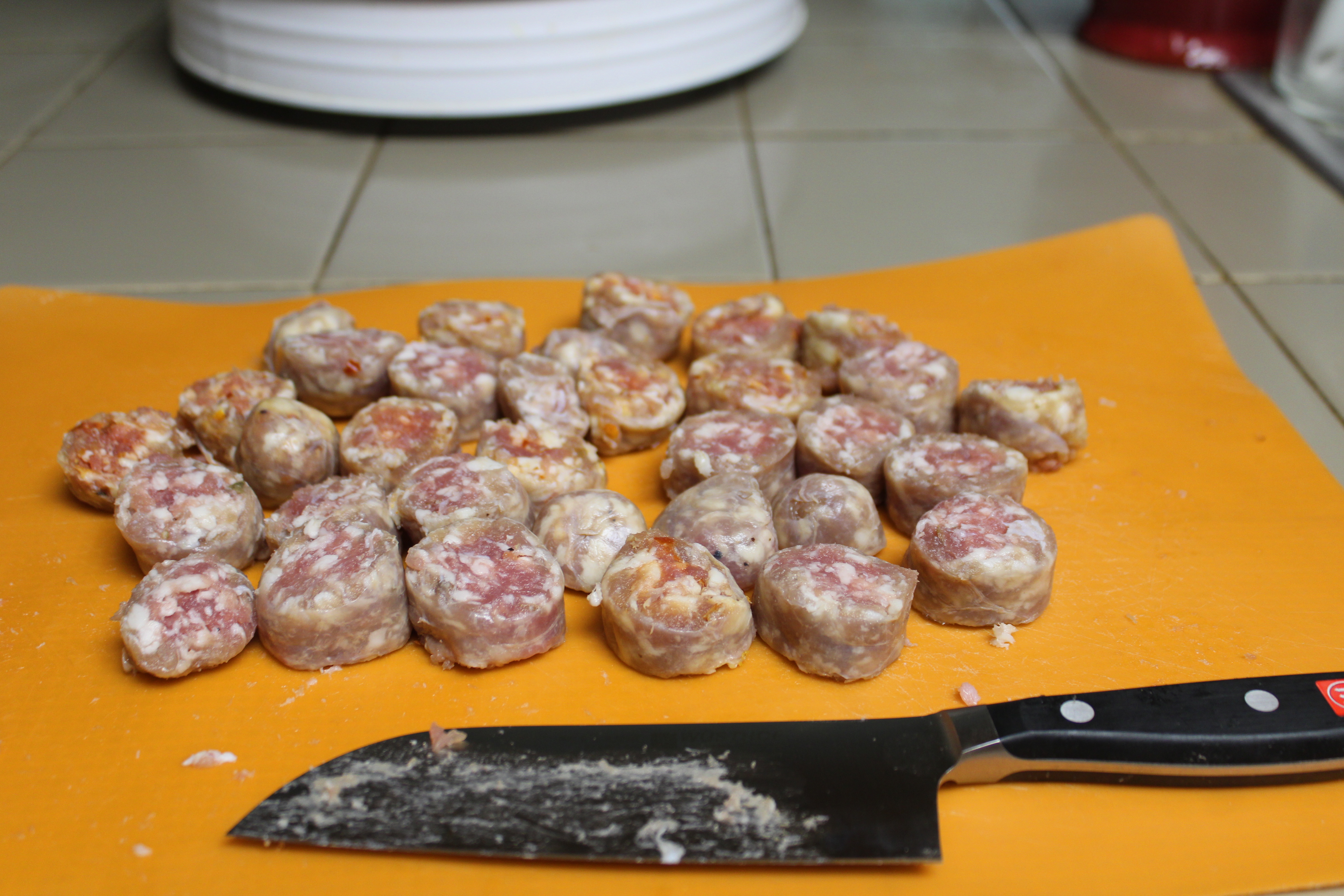
Warm oil in a high-sided skillet or pan. Once warmed, lightly fry the sausage links. Add diced tomatoes and pasta sauce. Reduce heat to simmer.


Cook pasta in the boiling water until al dente, about 12 minutes or so. Drain well. Add pasta to the sauce, gently toss to coat everything together.
Season to taste with a little red pepper flakes for some heat, then add a little cream for a silky finish.

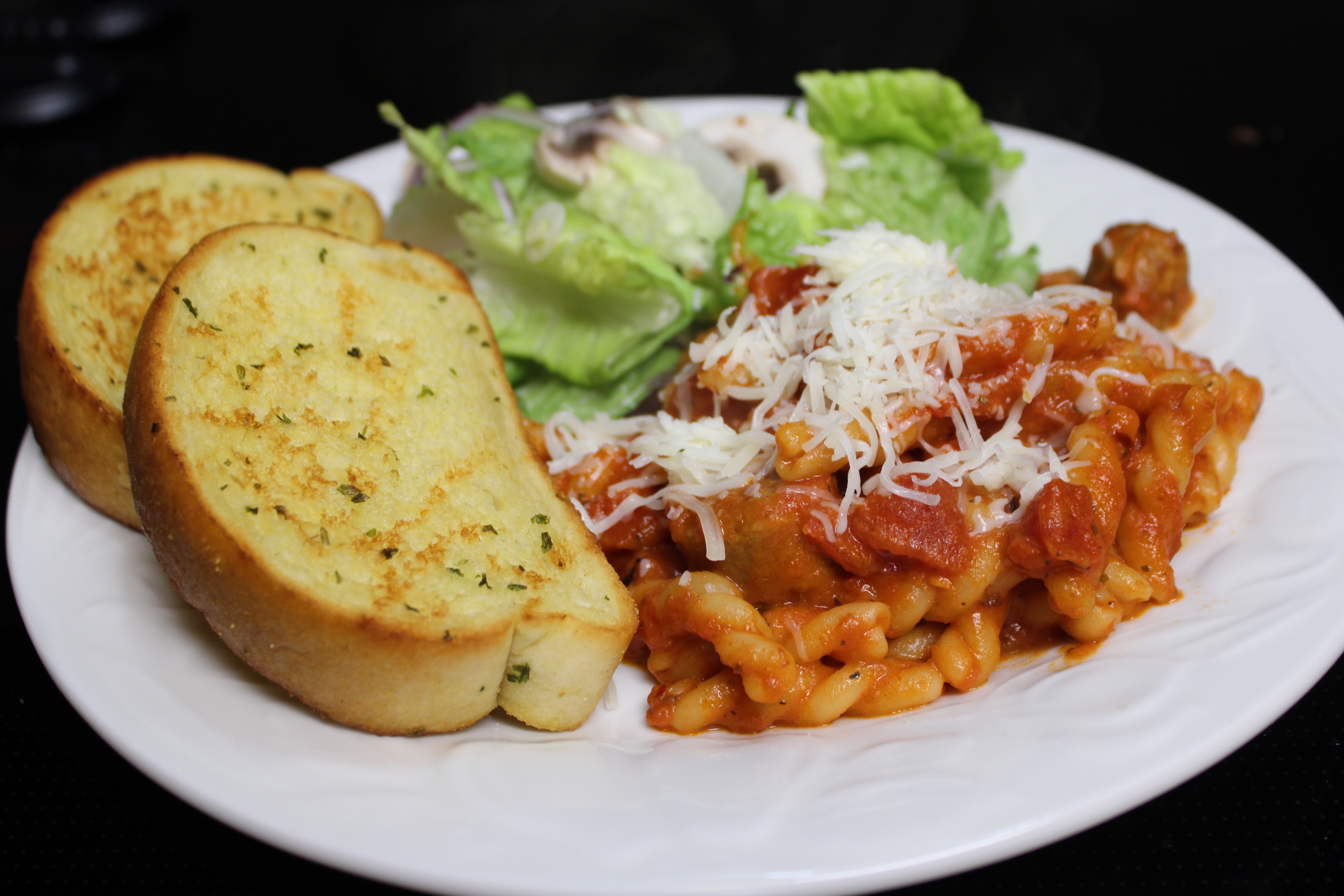
Serve this symbolic Coin Supper with a simple salad and warm garlic bread.
I will praise the name of God with a canticle:
and I will magnify Him with praise.
Let the poor see and rejoice:
seek ye God, and your soul shall live.


Delicious supper
LikeLiked by 1 person
Thank you.
LikeLiked by 1 person